It started as a straightforward compliance brief, but DesignOps made sure it didn't stay that way.
Picture me this, imagine you're a customer, and you want to buy a postpaid line, prepaid line, or home services. You open the app, browse the website, or walk into the store. For the customer it should be straightforward, no-nonsense experience. For employees however, we have to factor the regulations.
Telecoms tend to be restrictive around how pricing is displayed: discounts, fees, transparency obligations. All of it has to be front and centre, from the very first touchpoint.
The question is: How might we communicate all the pricing combinations more effectively with less confusion?
Here's what the final design looked like. Deceptively simple, and that's exactly the point.


The hidden complexity
The brief looked too straightforward, but something didn't add up. Before anything else, I stepped in as Lead Designer and pulled together the Journey Product Owner, Business Product Owner, and two senior Product Designers to pressure-test the assumptions. Here's what we uncovered:
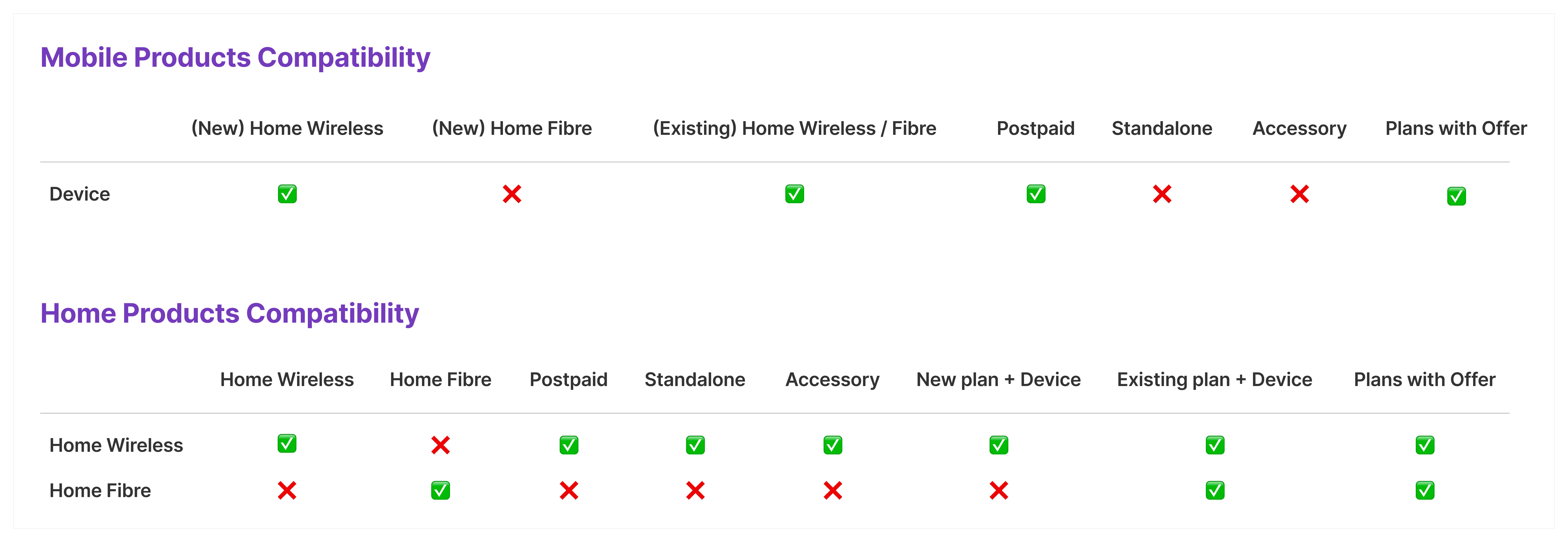
The underlying issue the regulatory team hadn't accounted in our new tech stack on top of the business as usual, where customers could now check out with multiple products at once. The backend validates whether every item in the basket is compatible with the others. With different regulations across different product verticals, the permutations got complex fast.
Here's what we needed to build
3
Channels
App, Web, Tablet
2
Journeys
Cart, Checkout
8
Products
2
Tech stacks
208
Total design permutations
Shipped in…
1 month
Crafting the product cart at scale
As the kickoff meeting wrapped, I moved fast. I brought in Design System, Content Writing, and UI Development as deliberate active contributors from day one. With requirements clear and direction agreed, everyone had a defined role:
Product Design: Covering all 208 variations across 3 products and 3 channels.
Design System: Building a versatile Cart component in both English and Arabic.
Content Writing: Verifying product content and edge case messaging.
Design System: Delivering pixel-perfect, RTL-ready components.
While the team was heads-down on delivery, I spotted a problem hiding in plain sight — 208 component variations, each requiring an immense number of dynamic properties. Thorough on paper, but a steep mountain to hand to designers and expect adoption.
To mitigate this, I brought the idea to the Design System team: a template and content library serving both Design System and UX Writing. The goal was a true plug-and-play experience: designers find what they need, drop it in, and move on. This could potentially reduce hours or days of work into just mere seconds.
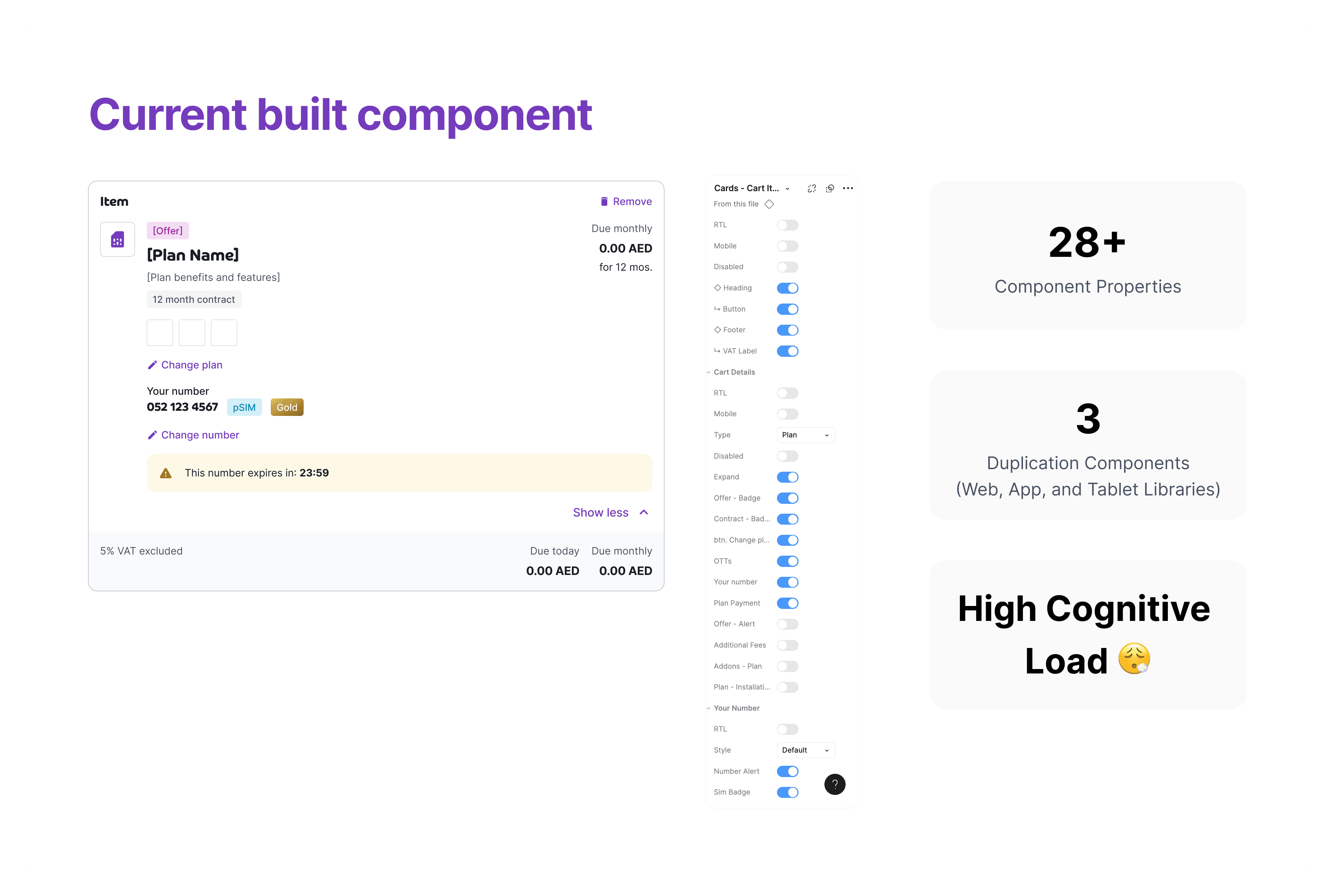
What could have been a future administrative nightmare, turned into a quick plug-and-play experience
Any designer can solve the brief in front of them. I wanted to solve the one coming after. Taking full ownership meant seeing the potential and the risks from day one, and the template library was the proof of that instinct. Here's what it unlocked:
The plug-and-play templates shorten project delivery time in half, what used to require building from scratch now takes minutes.
Cut design governance and audit time by 60–70% across both the Design System and Content Writing teams.
Within the first 3 months, the templates had already been adopted across 25+ other journeys.
Let’s get in touch 🤙🏼
I'm always open to conversations about Design Operations, design team building, or just exchanging notes on what's working and what isn't in the design industry.
Whether you're looking to bring on a DesignOps expert, want to collaborate, or just want to geek out about anything in general, feel free to contact me!
Reach me out